
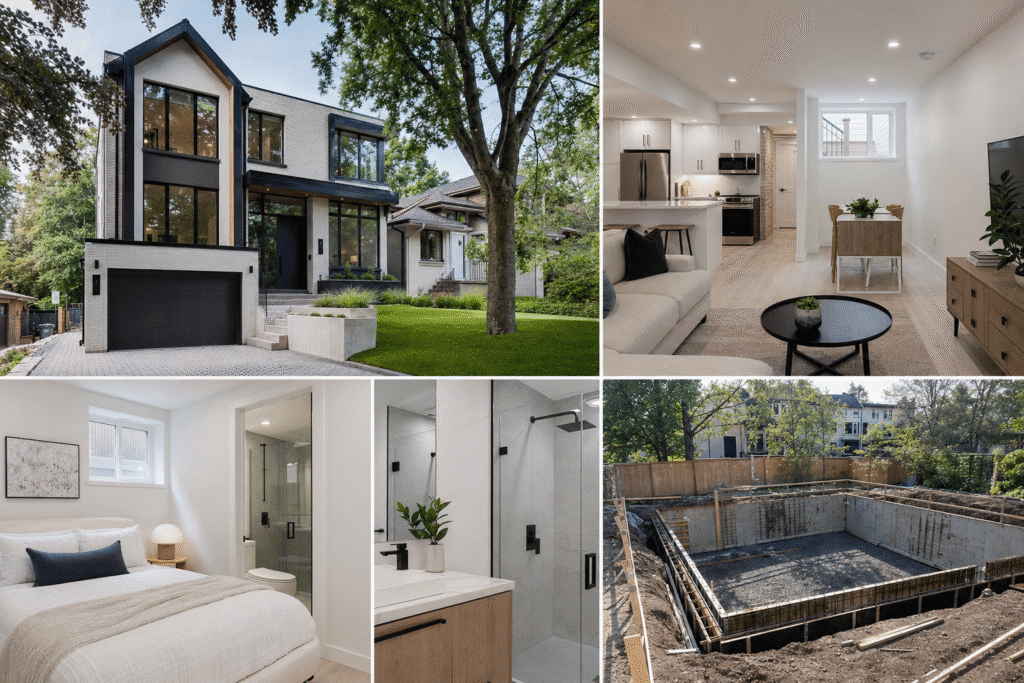
How to Make a Legal Basement Apartment Ontario: Complete Guide for Homeowners
Most Ontario homeowners believe converting a basement into a rental apartment is a simple renovation project. The reality? Nearly 70% of basement apartments in the Greater Toronto Area exist without proper permits or legal status, exposing property owners to significant liability, insurance voidance, and potential fines exceeding $50,000. Creating a legal basement apartment in Ontario requires far more than installing a separate entrance and kitchen. You need to navigate the Ontario Building Code, municipal zoning bylaws, fire safety requirements, HVAC capacity calculations, and proper permit applications. The process involves coordination between architects, engineers, HVAC specialists, and municipal inspectors. Done correctly, a legal basement apartment increases property value by 15-25%, provides substantial rental income, and ensures complete compliance with provincial and municipal regulations. This guide walks you through every technical and legal requirement to transform your basement into a fully compliant additional residential unit.
Understanding Legal Basement Apartments and Additional Residential Units in Ontario
A legal basement apartment, officially termed an Additional Residential Unit (ARU) or Second Suite under Ontario legislation, must meet specific criteria defined by the Planning Act and Ontario Building Code. Not every below-grade living space qualifies as a legal apartment.
The fundamental distinction centers on compliance. A legal basement apartment possesses all required building permits, passes municipal inspections, meets minimum ceiling heights (6 feet 5 inches in most areas, 6 feet 9 inches in living spaces), includes proper egress windows, incorporates fire separation assemblies, and receives occupancy approval from your local building department. An illegal apartment lacks one or more of these elements.
Since 2011, Ontario’s Provincial Policy Statement has required municipalities to permit second suites in detached, semi-detached, and townhouse dwellings. Bill 23 (More Homes Built Faster Act, 2022) expanded these rights further, allowing up to three units on most residential lots across Ontario without requiring rezoning or minor variance applications. Toronto’s zoning bylaws now permit second suites as-of-right in most residential zones.
The practical implications are significant. Legal status protects you from municipal enforcement actions, ensures your homeowner’s insurance remains valid (most policies explicitly void coverage for illegal apartments), allows you to claim rental income deductions legitimately, and provides tenant protections under the Residential Tenancies Act. When you eventually sell, buyers can secure financing against rental income only when the unit carries legal status.
Dr. Faraz, founder and lead architect at Delvin Dream Homes, regularly guides North York and Toronto homeowners through this process: “We see property owners who renovated basements themselves or hired unlicensed contractors, only to discover during home sales that their ‘finished basement’ doesn’t meet legal apartment standards. Retroactive compliance costs 40-60% more than doing it properly from the start because you’re correcting hidden deficiencies behind finished walls.”
Ontario Building Code Requirements for Legal Basement Apartments
The Ontario Building Code (OBC) establishes non-negotiable technical standards for basement apartments. Compliance isn’t optional, and inspectors verify every requirement before issuing occupancy permits.
Ceiling Height Standards: Habitable rooms (bedrooms, living rooms, kitchens) require minimum 6 feet 9 inches clear height measured from finished floor to finished ceiling. Bathrooms, laundry rooms, and hallways need only 6 feet 5 inches. Basement apartments with lower ceilings require underpinning, a complex structural process involving foundation excavation and reinforcement that typically costs $300-500 per linear foot.
Egress and Emergency Escape: Every bedroom must have either a door leading directly to the exterior or a compliant egress window. Egress windows require minimum opening dimensions: 3.8 square feet of unobstructed area, minimum 15 inches wide, minimum 24 inches high, with the bottom of the opening no more than 5 feet above the bedroom floor. Window wells serving egress windows need minimum 550mm projection from the foundation wall and often require permanent ladders or steps when deeper than 600mm.
Fire Separation and Safety: The basement ceiling must provide fire separation between dwelling units using 1/2 inch Type X gypsum board (fire-rated drywall) on resilient channels. This assembly provides the required fire resistance rating while reducing sound transmission between units. Interconnected smoke alarms are mandatory on every level, with carbon monoxide detectors required adjacent to sleeping areas and within 5 meters of fuel-burning appliances.
Separate Heating and Ventilation: Basement apartments require independent climate control or dedicated zones with separate thermostats. The existing HVAC system must undergo load calculations to verify sufficient capacity for the additional unit. Most conversions require furnace upgrades or supplementary systems. Kitchens need range hoods vented to exterior (recirculating hoods don’t meet code), and bathrooms require exhaust fans vented outside, not into attics or crawlspaces.
Plumbing and Drainage: New kitchens and bathrooms need proper drainage connections to municipal sewers or septic systems. Basement fixtures below the sewer line require sewage ejector pumps. All plumbing work must be performed by licensed plumbers and inspected before concealment. Backwater valves prevent sewage backup and are now mandatory in most Toronto neighborhoods.
The Legal Basement Design & Permits in Toronto & GTA service addresses every Building Code requirement through professional drawings and engineering, ensuring first-pass inspection approval.
Zoning Bylaws and Municipal Approval Process
Building Code compliance represents only half the equation. Municipal zoning bylaws impose additional requirements that vary by jurisdiction, making local expertise essential.
Toronto’s Zoning By-law 569-2013 permits second suites in most residential zones but mandates specific conditions. Parking requirements historically created barriers, but recent amendments reduced or eliminated parking mandates for additional residential units in many areas, particularly near transit corridors. Your property must contain sufficient parking for the main dwelling plus the additional unit, typically calculated as one space per unit, unless exemptions apply.
Lot size and coverage restrictions may limit basement apartment eligibility. Some municipalities require minimum lot frontages or areas, though provincial legislation increasingly restricts such barriers. Floor area calculations become critical because the basement apartment’s gross floor area counts toward your property’s total permitted GFA under zoning bylaws.
Separate entrance requirements vary by municipality. Toronto generally requires basement apartments to have independent exterior access, though shared entry vestibules are sometimes permitted. The entrance must meet accessibility standards where possible and cannot encroach into required yard setbacks without Committee of Adjustment approval.
The permit application process typically follows this sequence:
- Pre-consultation: Submit preliminary drawings to the municipal planning and building departments for initial review and feedback on zoning compliance
- Professional drawings: Engage licensed architects or designers to prepare detailed construction drawings showing floor plans, elevations, mechanical systems, electrical layouts, and structural details
- Engineering reports: Obtain HVAC load calculations, structural assessments if removing or modifying load-bearing walls, and energy compliance calculations
- Building permit application: Submit complete drawing packages with applicable fees (typically $3,000-8,000 depending on project scope)
- Plan review: Municipal reviewers examine submissions for Building Code and zoning compliance, often requesting revisions
- Permit issuance: Once approved, you receive the building permit authorizing construction commencement
- Inspections: Schedule mandatory inspections at key stages including framing, insulation, plumbing rough-in, electrical rough-in, HVAC, and final occupancy
- Occupancy permit: After passing final inspection, the municipality issues occupancy approval, confirming legal status
Timeline expectations range from 3-6 months for straightforward conversions to 8-12 months for complex projects requiring structural modifications or Committee of Adjustment applications. Working with experienced professionals significantly accelerates approvals.
Structural and Mechanical Systems Considerations
Basement apartment conversions frequently expose inadequate or outdated building systems requiring upgrades beyond the apartment itself. Addressing these issues early prevents costly surprises during construction.
Foundation and Structural Assessment: Many older Toronto homes have foundations that don’t meet current basement apartment standards. Stone foundations common in pre-1950 construction often require interior reinforcement or complete replacement. Load-bearing walls that homeowners want removed for open-concept layouts need engineered beam installations with proper support posts extending to adequate footings. Post locations must not interfere with plumbing stacks or electrical panels.
Underpinning becomes necessary when ceiling heights fall short of Building Code minimums. This process involves excavating beneath the existing foundation in controlled sections, pouring new concrete to lower the basement floor, and ensuring structural integrity throughout. Underpinning requires engineering oversight and adds $40,000-80,000 to project budgets for typical single-family homes.
Electrical Service and Panel Capacity: Adding a complete dwelling unit substantially increases electrical demand. Older homes with 100-amp services typically require upgrades to 200-amp service to accommodate the additional load. Licensed electrical contractors must perform load calculations demonstrating adequate capacity. The electrical panel may need replacement or expansion, and separate metering for the basement unit requires coordination with utility providers. Budget $3,000-8,000 for service upgrades.
HVAC System Capacity: Existing heating and cooling systems rarely have excess capacity for an additional dwelling unit. HVAC contractors must perform Manual J load calculations to determine heating and cooling requirements for the basement apartment. Options include upgrading the central system to higher capacity, installing a separate furnace and air conditioner for the basement unit, or implementing ductless mini-split systems. Proper ductwork design ensures adequate air circulation to all rooms while maintaining quiet operation.
Plumbing and Water Heater: New kitchens and bathrooms require hot water supply. Tank-style water heaters may need capacity increases, or you might install a separate on-demand water heater dedicated to the basement apartment. Water pressure issues common in older neighborhoods sometimes necessitate pressure boosting systems. All plumbing installations must include proper venting to prevent drain trap siphoning and sewer gas infiltration.
Delvin Dream Homes coordinates these technical disciplines through integrated project management, ensuring structural, mechanical, electrical, and plumbing systems work harmoniously while meeting all code requirements.
Design Strategies for Functional and Marketable Basement Apartments
Legal compliance establishes the foundation, but thoughtful design determines whether your basement apartment attracts quality tenants and maximizes rental income. Strategic design choices balance construction costs against rental market appeal.
Layout Optimization: Efficient layouts minimize circulation space (hallways) while maximizing usable living areas. Open-concept designs combining kitchen, dining, and living areas create perceived spaciousness critical in below-grade units. Bedroom locations should prioritize exterior wall placement for egress windows and natural light. Two-bedroom configurations command significantly higher rents than one-bedroom units in most GTA markets, often justifying the modest additional construction cost.
Natural Light Maximization: Basement apartments suffer from inherent darkness. Maximize window sizes within structural constraints, using egress windows in bedrooms and large windows in living areas. Window wells with white or reflective surfaces bounce more light into interior spaces. Light paint colors, strategic mirror placement, and well-planned artificial lighting compensate for limited natural light. Consider glass doors between interior rooms where privacy permits to share natural light from windowed spaces.
Ceiling Height Perception: Even when meeting minimum Building Code heights, basement apartments can feel confined. Design techniques create vertical spaciousness: avoid bulkhead soffits where possible by running mechanicals parallel to joists, use recessed lighting instead of pendant fixtures, paint ceilings white or light colors, and avoid heavy crown moldings that visually lower ceilings. Exposed and painted ceiling joists sometimes work in modern industrial-style designs while maximizing height.
Sound Insulation: Noise transmission between units creates tenant dissatisfaction and complaints. Beyond code-required fire separation, add sound insulation measures: resilient channels under main floor subfloors, acoustic insulation batts in ceiling cavities, staggered-stud or double-stud walls between units, acoustic underlayment under main floor finishes, and solid-core doors. Quality sound isolation justifies premium rental rates and reduces tenant turnover.
Storage Solutions: Basement apartments typically lack storage space. Built-in solutions add value: closet organizers maximizing bedroom closet efficiency, kitchen pantry cabinets to ceiling height, bathroom vanities with ample storage, and dedicated storage closets for seasonal items. Consider whether basement mechanical rooms can share space with tenant storage while maintaining code-required clearances around equipment.
Separate Entrance Design: The basement entrance significantly impacts curb appeal and tenant perception. Attractive entrance designs with proper lighting, weather protection, and landscaping create positive first impressions. Stairs must meet Building Code requirements for riser height, tread depth, handrails, and landings. Consider whether side-yard access or front walkout configurations work best for your property’s topography and municipal setback requirements.
Professional interior design services optimize these elements, creating basement apartments that rent quickly at premium rates while staying within construction budgets.
Cost Analysis and Return on Investment
Understanding comprehensive costs and realistic returns helps homeowners make informed decisions about basement apartment projects. Numbers vary based on property conditions, scope decisions, and market positioning.
Typical Cost Breakdown: Complete legal basement apartment conversions in the Toronto and North York areas typically range from $75,000 to $150,000, depending on existing conditions and finish quality. This investment includes:
- Architectural and engineering fees: $5,000-12,000
- Building permits and development charges: $3,000-8,000
- Structural work (if required): $5,000-15,000
- Underpinning (if needed): $40,000-80,000
- Framing and fire separation: $8,000-15,000
- Electrical service upgrade and wiring: $8,000-18,000
- Plumbing installations: $10,000-20,000
- HVAC system: $6,000-15,000
- Insulation and drywall: $8,000-15,000
- Flooring throughout: $5,000-12,000
- Kitchen installation: $8,000-20,000
- Bathroom: $8,000-18,000
- Separate entrance construction: $5,000-12,000
- Painting and finishing: $4,000-8,000
- Contingency (10-15%): $7,500-22,500
Properties requiring extensive structural work, underpinning, or complete system replacements obviously trend toward higher ranges. Conversely, newer homes with adequate ceiling heights and modern systems support more economical conversions.
Rental Income Potential: Toronto basement apartment rental rates vary by neighborhood, size, and finish quality. Current GTA market rates (2024) show one-bedroom basement apartments commanding $1,500-2,200 monthly, while two-bedroom units achieve $1,900-2,800 monthly. Premium finishes, excellent locations near transit, and superior soundproofing justify higher rental rates.
Return on Investment Calculation: Consider a $100,000 basement apartment generating $2,000 monthly rent ($24,000 annually). Property tax increases typically add $1,200-1,800 annually, utilities (if included) cost $1,200-2,400 annually, maintenance reserves approximately 5% of rent ($1,200 annually), and insurance increases run $300-600 annually. Net annual income approximates $18,900-20,100, yielding 18-20% annual return on the initial investment.
Property value increases provide additional returns. Legal basement apartments typically add 15-25% to property values, meaning a $100,000 investment in a $900,000 home could increase market value by $135,000-225,000. Combined rental income and property appreciation often generate total returns exceeding 30-40% within the first five years.
Financing Considerations: Several financing options fund basement apartment conversions. Home equity lines of credit (HELOCs) offer flexible access to funds at prime plus 0.5-1%. Refinancing mortgages at current rates may provide lower costs if existing mortgages carry higher rates. Specialized renovation mortgages from some lenders advance funds in stages tied to construction progress. The anticipated rental income often qualifies toward debt servicing calculations, improving borrowing capacity.
Working with Licensed Professionals and HCRA Registration
The complexity of legal basement apartment projects demands professional expertise across multiple disciplines. Choosing qualified, licensed professionals dramatically impacts project success, cost control, and legal compliance.
The HCRA Advantage: Since February 2021, Ontario’s Home Construction Regulatory Authority (HCRA) requires builder licensing for most residential construction projects. Licensed builders must demonstrate technical knowledge, maintain minimum insurance coverage, provide Tarion warranty protection, and adhere to professional standards. Working with HCRA-licensed builders like Delvin Dream Homes provides homeowner protections unavailable from unlicensed contractors.
Tarion warranty coverage, mandatory for HCRA-licensed builders, protects homeowners against construction defects for one year (workmanship and materials), two years (water penetration, electrical, plumbing, HVAC), and seven years (major structural defects). This protection proves invaluable if issues emerge after project completion. Unlicensed contractors offer no such recourse.
Architectural and Design Services: Licensed architects or registered building designers prepare construction drawings meeting municipal submission requirements. These professionals understand Building Code requirements, zoning bylaws, and municipal submission standards. Dr. Faraz brings architectural expertise specifically focused on Toronto’s regulatory environment, streamlining approvals through properly prepared initial submissions that minimize revision requests.
Engineering Consultants: Structural engineers assess foundation adequacy, design beam installations for load-bearing wall removal, and provide underpinning designs when required. HVAC engineers perform load calculations ensuring proper system sizing. These professional stamps on drawings satisfy building department requirements and ensure life safety.
Coordinated Project Management: Basement apartment conversions require orchestrating multiple trades: demolition, underpinning specialists, foundation waterproofing, framers, electricians, plumbers, HVAC contractors, insulation installers, drywall finishers, flooring installers, kitchen installers, painters, and more. Coordinating these trades, scheduling inspections at proper stages, and ensuring work quality requires experienced construction management.
Delvin Dream Homes offers comprehensive services from initial architectural design through final construction completion. This integrated approach eliminates coordination gaps between designers and builders, reduces change orders, and delivers projects on schedule and budget. The combination of architectural expertise and licensed building services under HCRA registration with Tarion warranty coverage provides unmatched homeowner protection.
Common Pitfalls and How to Avoid Them
Basement apartment projects frequently encounter predictable problems. Understanding common pitfalls enables proactive avoidance strategies.
Starting Construction Before Permit Approval: Eager homeowners sometimes begin work before receiving building permits, assuming approvals are formalities. Municipal inspectors who discover unpermitted work issue stop-work orders and may require demolition of completed work for inspection access. Always wait for permit issuance before starting construction.
Inadequate Waterproofing: Basement water infiltration destroys finishes and creates mold problems. Many older Toronto homes have compromised foundation waterproofing. Address exterior waterproofing, install interior drainage systems with sump pumps, apply waterproof membranes to foundation walls, and ensure proper grading around the house before investing in interior finishes.
Insufficient Budget Contingencies: Basement projects routinely uncover hidden problems: foundation cracks requiring repair, outdated electrical requiring complete replacement, inadequate floor joist sizing requiring reinforcement, or asbestos materials requiring professional abatement. Budget minimum 15% contingency for unforeseen issues, more for older properties.
Ignoring Separate Utility Metering: Landlords who include utilities in rent face unpredictable expenses and tenant overconsumption. Installing separate hydro meters (approximately $1,500-3,000) and individual gas meters where possible transfers utility costs to tenants and simplifies rental arrangements. Some municipalities require separate metering for new additional residential units.
Compromising on Sound Insulation: Inadequate sound separation creates ongoing tenant friction and complaints. The minimum Building Code fire separation provides minimal acoustic isolation. Invest in enhanced sound insulation measures during construction when installation costs remain modest. Retrofitting sound improvements after completion costs exponentially more.
Poor Contractor Selection: Hiring the lowest bidder or unlicensed contractors frequently leads to code violations, failed inspections, cost overruns, and abandoned projects. Verify HCRA licensing, check references thoroughly, review past project photos, confirm insurance coverage, and ensure detailed written contracts. Licensed builders registered with HCRA provide accountability and warranty protection worth far more than modest cost savings from unlicensed contractors.
Neglecting As-Built Measurements: Older homes rarely have accurate existing drawings. Professional as-built measurement services create precise dimensional surveys of existing conditions, enabling accurate design work and preventing costly field conflicts during construction. This upfront investment of $800-1,500 prevents expensive changes and delays during construction.
Frequently Asked Questions
Do I need permits to finish my basement as a rental apartment in Ontario?
Yes, absolutely. Creating a legal basement apartment in Ontario requires building permits demonstrating compliance with the Ontario Building Code and municipal zoning bylaws. Permits ensure proper fire separation, egress windows, ceiling heights, mechanical systems, and life safety features. Renting a basement apartment without proper permits exposes you to municipal fines up to $50,000, voids your homeowner’s insurance, and creates liability if tenant injuries occur. The permit process includes plan review, construction inspections at key stages, and final occupancy approval confirming legal status. Finished basements used by homeowners don’t typically require permits, but converting any space into a separate rental dwelling unit always requires building permits and inspections.
How long does it take to get approval for a basement apartment in Toronto?
Timeline expectations for basement apartment approvals in Toronto typically range from 3-6 months from initial design through permit issuance, followed by 3-5 months construction and inspections. The process involves architectural design and engineering (4-6 weeks), building permit application submission and review (8-12 weeks), permit issuance, construction (12-16 weeks), and final inspections and occupancy approval (2-4 weeks). Complex projects requiring structural modifications, underpinning, or Committee of Adjustment applications extend timelines to 8-12 months total. Working with experienced professionals familiar with Toronto’s building department procedures accelerates approvals through properly prepared initial submissions that minimize revision requests and resubmissions. Pre-consultation meetings with city planners before formal submission help identify potential issues early.
What is the minimum ceiling height for a legal basement apartment in Ontario?
The Ontario Building Code requires minimum 6 feet 9 inches (2060mm) ceiling height in habitable rooms including bedrooms, living rooms, dining rooms, and kitchens, measured from finished floor to finished ceiling. Bathrooms, laundry rooms, and hallways require only 6 feet 5 inches (1950mm) minimum height. These measurements apply to at least 75% of the required room area, with remaining areas permitted down to 6 feet 5 inches under dropped beams or bulkheads. Basement apartments with inadequate ceiling heights require underpinning to lower the floor level, an expensive structural process involving foundation excavation and reinforcement. Some older Toronto homes have basement heights below these minimums, making underpinning necessary for legal apartment status. Accurate measurements during initial assessment prevent surprises later in the process.
Can I create a basement apartment if my property doesn’t have separate parking?
Parking requirements for basement apartments vary by municipality and have been relaxed significantly under recent Ontario legislation. Toronto’s current zoning bylaws reduce or eliminate parking requirements for additional residential units in many situations, particularly properties near transit stations or in the former City of Toronto boundaries. Bill 23 amendments further restrict municipal ability to impose parking requirements that create barriers to additional residential units. Properties that previously required one parking space per dwelling unit may now be exempt from additional parking for second suites. However, some neighborhoods and zoning districts still maintain parking requirements. Your specific property’s parking obligations depend on location, zoning designation, existing parking supply, and proximity to transit. Professional review of your property’s zoning determines applicable parking requirements and whether exemptions or variances might be available through Committee of Adjustment applications if needed.
What happens if I rent out an illegal basement apartment?
Renting an illegal basement apartment without proper permits creates multiple serious risks. Municipal building departments can issue compliance orders requiring you to cease rental use, obtain proper permits, or remove the apartment entirely, with fines reaching $50,000 for continued violations. Your homeowner’s insurance policy likely contains exclusions for illegal rental units, meaning insurers will deny claims related to the apartment and may void your entire policy upon discovery. If tenant injuries occur due to code violations (inadequate egress, absent smoke alarms, improper fire separation), you face personal liability for damages. The Canada Revenue Agency may disallow rental income deductions if the unit lacks legal status. When selling your property, buyers cannot obtain financing against illegal apartment rental income, reducing your property value and limiting the buyer pool. Tenants in illegal apartments may withhold rent or pursue Landlord and Tenant Board claims. The risks vastly outweigh any short-term savings from avoiding the permit process. Investing in proper legalization protects your property value, ensures insurance coverage, and eliminates liability concerns.
Transform Your Basement into a Legal, Income-Generating Asset
Creating a legal basement apartment in Ontario represents a substantial investment that delivers ongoing rental income, increased property value, and complete peace of mind through full regulatory compliance. The process demands expertise across architecture, engineering, municipal approvals, construction management, and Ontario Building Code interpretation. Attempting basement apartment conversions without professional guidance frequently results in failed inspections, cost overruns, and properties that remain illegal despite significant expenditure.
Delvin Dream Homes combines architectural design expertise with licensed construction services under HCRA registration, providing comprehensive basement apartment solutions from initial concept through final occupancy approval. Dr. Faraz and the team at our North York office have guided hundreds of Greater Toronto Area homeowners through successful basement apartment projects, navigating Toronto’s zoning bylaws and building department requirements while delivering quality construction backed by Tarion warranty protection. Whether you’re considering a basement apartment for rental income, multigenerational family living, or property value enhancement, professional guidance ensures your investment achieves its full potential. Contact Delvin Dream Homes at (647) 994-6010 or request your free consultation to discuss your basement apartment project and receive expert assessment of your property’s potential.
