
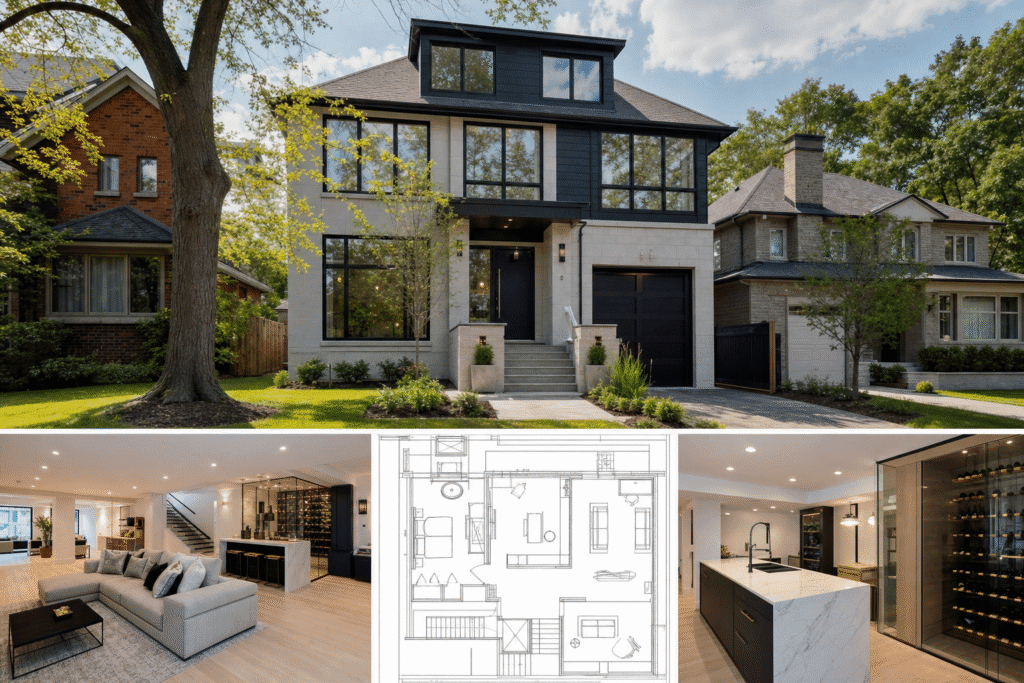
Most Toronto homeowners believe that legalizing their basement will automatically spike their property tax bill by thousands of dollars. That’s the rumor that stops countless families from converting unused space into rental income or multigenerational living quarters. The reality? The relationship between legal basement conversions and property tax increases is far more nuanced than most people understand, and in many cases, the financial benefits of a properly executed legal basement far outweigh any modest assessment adjustments.
Property tax in Ontario is calculated based on your home’s assessed value as determined by the Municipal Property Assessment Corporation (MPAC). When you create a legal basement apartment, particularly an Additional Residential Unit (ARU), you are technically adding livable square footage and potentially rental income potential to your property. This can trigger a reassessment. But the increase isn’t automatic, uniform, or as dramatic as basement renovation myths suggest. Understanding how MPAC evaluates these improvements, what triggers a reassessment, and how to navigate the process strategically makes all the difference between panic and profit.
How MPAC Assesses Legal Basement Conversions in Ontario
The Municipal Property Assessment Corporation conducts property assessments every four years across Ontario, though individual properties can be reassessed when significant improvements are made. A legal basement conversion falls into this category because it fundamentally changes your property’s characteristics: you’re adding a separate dwelling unit with its own kitchen, bathroom, entrance, and living space.
MPAC evaluates properties based on comparable sales in your neighborhood, physical condition, location, and property features. When you legalize a basement, you’re increasing the functional living area and potentially the rental income stream. These factors influence your Current Value Assessment (CVA), which municipalities then use to calculate property tax.
What triggers MPAC’s attention? Building permit applications. When you apply for permits to create a legal basement in Toronto or anywhere in Ontario, this information flows to MPAC. They don’t reassess immediately, but your property gets flagged for evaluation during the next assessment cycle or potentially sooner if the improvement is substantial.
At Delvin Dream Homes, Dr. Faraz and our design team work with Toronto homeowners to create legal basement layouts that maximize rental potential while understanding the full financial picture, including property tax implications. Our permit drawing process at 105 Harrison Garden Boulevard in North York includes consultation on how design choices affect both immediate construction costs and long-term property valuation.
The assessment increase typically reflects the added value of a self-contained unit. If comparable properties in your Toronto neighborhood with legal basements sell for $100,000 more than those without, your assessment may increase proportionally. Your property tax increase is then your municipality’s tax rate multiplied by that assessment increase.
The Real Numbers Behind Property Tax Increases for Legal Basements
Let’s translate MPAC assessment theory into actual Toronto numbers. Property tax rates vary by municipality, but Toronto’s 2026 residential rate sits around 0.66% of assessed value. If your legal basement conversion increases your property assessment by $100,000 (a reasonable estimate for a well-executed second suite), your annual property tax increase would be approximately $660.
Compare that annual cost to the rental income potential. A legal basement apartment in North York, Scarborough, or Etobicoke can generate $1,800 to $2,500 monthly, depending on size, finishes, and location. That’s $21,600 to $30,000 in annual rental income. Even after the property tax increase, utilities, and maintenance, you’re looking at substantial positive cash flow.
The math changes your perspective entirely. You’re not losing money to property tax, you’re investing in an income-generating asset that also increases your home’s resale value. Buyers pay premium prices for properties with legal rental units because they understand the income potential.
| Scenario | Assessment Increase | Annual Tax Increase (Toronto Rate) | Annual Rental Income | Net Annual Benefit |
|---|---|---|---|---|
| Basic Legal Basement | $80,000 | $528 | $21,600 | $21,072 |
| Premium Legal Basement | $120,000 | $792 | $28,800 | $28,008 |
| High-End ARU with Separate Entrance | $150,000 | $990 | $33,600 | $32,610 |
These numbers assume market-rate rental in the Greater Toronto Area as of 2026. Your specific numbers will vary based on neighborhood, basement size, finish quality, and rental market conditions. But the fundamental equation remains favorable: rental income vastly exceeds property tax increases in virtually every scenario.
Working with an HCRA-licensed builder like Delvin Dream Homes ensures your legal basement meets Ontario Building Code requirements and qualifies for Tarion Warranty coverage, which protects both your investment and future rental income stream. Our end-to-end service from design through construction means no surprises that could affect your property assessment or rental marketability.
What Counts as a Legal Basement in Toronto and Why It Matters
Not all finished basements are created equal in the eyes of Toronto’s Municipal Licensing and Standards or MPAC. A legal basement, properly termed an Additional Residential Unit, must meet specific criteria under the Ontario Building Code and Toronto’s zoning bylaws. These requirements exist for safety, but they also define what MPAC considers assessable living space.
A legal basement apartment requires: minimum ceiling height of 6 feet 5 inches throughout (1.95 meters), proper egress windows in bedrooms meeting minimum size requirements, separate kitchen facilities, dedicated bathroom, appropriate fire separation between units, proper HVAC systems, and electrical systems that meet code for separate dwelling units.
Many Toronto homes have finished basements with recreation rooms, home offices, or guest bedrooms. These don’t qualify as legal apartments and shouldn’t trigger the same assessment increases because they lack the self-contained features of a separate dwelling unit. The distinction matters enormously for property tax purposes.
When you work through proper channels to create a legal basement design with full permits, you’re documenting that you’ve added a rentable unit. When you finish a basement as family space without permits, MPAC may not even know about the improvement, or they’ll assess it differently as renovated space rather than a separate unit.
This creates a critical decision point for homeowners. Some choose to renovate basements without permits to avoid documentation that might increase property taxes. This strategy carries substantial risks: Municipal Licensing and Standards can issue work orders requiring you to remove unpermitted work, insurance companies may deny claims related to unpermitted spaces, and you face liability if tenants are injured in illegal apartments.
Dr. Faraz consistently advises clients at our North York office that the modest property tax increase from proper legalization is far less costly than the legal, insurance, and liability risks of illegal basement apartments. Our architectural design services include full permit drawings that satisfy Toronto’s Committee of Adjustment requirements when necessary, ensuring your investment is protected and your rental income is legitimate.
Strategic Timing and Assessment Appeals for Basement Conversions
Understanding MPAC’s assessment cycle gives you strategic options for managing when your legal basement affects property taxes. MPAC conducts province-wide reassessments every four years, with the most recent occurring in 2024 and the next scheduled for 2028. Between these general reassessments, MPAC only reassesses individual properties when they’re notified of significant changes like new construction, additions, or basement conversions.
When you apply for a building permit in Toronto, that information flows to MPAC through municipal databases. They typically won’t reassess immediately but will flag your property for the next valuation cycle. This means you might complete your legal basement in 2026 but not see the assessment increase reflected in your property tax bill until 2027 or 2028, depending on when MPAC processes the change.
This lag creates opportunity. You can begin collecting rental income before your property tax adjusts upward, giving you months or even a year of maximum cash flow. Smart homeowners factor this timing into their renovation budgets and rental income projections.
What if MPAC’s assessment seems excessive? You have the right to Request Reconsideration (RfR) within 120 days of receiving your assessment notice. This process allows you to challenge the assessed value if you believe it doesn’t reflect fair market value or if MPAC incorrectly categorized your improvements.
Common grounds for successful appeals include: MPAC overestimating the size or quality of your legal basement, incorrect classification of the unit type, or assessment values that don’t align with comparable properties in your neighborhood. You’ll need documentation: your permit drawings, actual construction costs, comparable property sales data, and potentially an independent appraisal.
At Delvin Dream Homes, our permit drawing and as-built measurement services provide the precise documentation you need if you ever need to challenge a property assessment. When we create legal basement plans for Toronto homeowners, we maintain detailed records of square footage, specifications, and design features that can support fair assessment valuations.
Hidden Financial Benefits That Offset Property Tax Increases
Focusing solely on property tax increases misses the complete financial picture of legal basement conversions. Multiple financial benefits work in your favor, often dramatically outweighing the assessment bump.
First and most obvious: rental income. We’ve covered the monthly cash flow, but consider the long-term compounding effect. That $2,000 monthly rental income is $24,000 annually. Over 10 years, even without rental increases, you’re looking at $240,000 in gross income. Factor in modest 2-3% annual rent increases tracking inflation, and the number climbs toward $270,000. Your property tax increase over that same decade? Perhaps $8,000 to $10,000 total.
Second: mortgage offset. Many Toronto homeowners use legal basement rental income to qualify for larger mortgages or to reduce their effective monthly housing costs. If your basement generates $2,000 monthly and your mortgage payment is $3,500, your actual out-of-pocket housing cost drops to $1,500. This fundamentally changes housing affordability.
Third: property value appreciation. Homes with legal rental suites command premium prices in Toronto’s real estate market because buyers understand the income potential. That same $100,000 assessment increase MPAC applies? The market often values the improvement even higher. Real estate investors regularly pay 10-15% premiums for properties with established, legal rental income.
Fourth: tax deductions for rental property owners. When you rent a legal basement apartment, you can deduct proportional expenses: mortgage interest, property taxes (yes, including the increase), insurance, utilities, repairs, and maintenance. These deductions reduce your taxable rental income, improving your after-tax cash flow.
Fifth: multigenerational living value that isn’t purely financial. Many Toronto families create legal basements not primarily for rental income but to house aging parents, adult children, or extended family. The property tax increase becomes a small price for keeping family close while maintaining privacy and independence for everyone.
When Delvin Dream Homes designs custom home projects or renovation additions throughout Ontario, we help clients model these complete financial scenarios. Our experience with Committee of Adjustment applications and zoning variances means we understand which improvements generate the best return on investment relative to their property tax impact.
Comparing Legal Basements to Other Income-Generating Property Improvements
Legal basements aren’t the only way Toronto homeowners add rental income potential to their properties. Understanding how basement conversions compare to alternatives helps you choose the right strategy for your property and financial goals.
Garden suites, authorized under recent Ontario housing legislation, are separate structures in your backyard with their own foundation, utilities, and entrance. They typically generate similar or higher rental income than basement apartments because they offer more privacy and often appeal to higher-paying tenants. However, they require more substantial construction investment (typically $200,000 to $350,000 compared to $75,000 to $150,000 for legal basements) and create larger property assessment increases.
Laneway houses function similarly to garden suites but front onto rear lanes rather than backyards. They’re only viable on properties with laneway access, limiting availability primarily to older Toronto neighborhoods. The rental income potential is excellent, but construction costs are even higher, and property tax implications are more significant because you’re essentially adding a complete second dwelling to your lot.
Second-story additions can create second suite rental units above ground, often with better natural light and views than basements. Construction costs run higher than basement conversions because you’re adding to the building envelope, but rental income can also command premium rates. Property assessment increases tend to be larger because you’re adding above-grade square footage that MPAC values more highly than below-grade space.
Multiplexes represent the most substantial transformation: converting single-family homes into duplexes, triplexes, or fourplexes. Recent Ontario legislation has made this easier in many municipalities. The income potential is substantial (three to four rental units instead of one), but so are the construction costs, property tax implications, and complexity. This strategy works best for investors rather than homeowner-occupants.
| Improvement Type | Typical Cost | Monthly Income | Assessment Impact | Best For |
|---|---|---|---|---|
| Legal Basement | $75,000-$150,000 | $1,800-$2,500 | Moderate | Owner-occupants, first-time landlords |
| Garden Suite | $200,000-$350,000 | $2,200-$3,000 | Significant | Larger properties, premium rentals |
| Second Story Addition | $180,000-$300,000 | $2,000-$2,800 | Significant | Properties maxing out lot coverage |
| Duplex Conversion | $150,000-$250,000 | $3,600-$5,000 (two units) | Very Significant | Investment properties, multi-family zoning |
For most Toronto homeowners living in their properties, legal basement conversions offer the most favorable balance of cost, rental income, property tax impact, and construction disruption. You remain in your home throughout construction, costs are manageable, and the rental income begins flowing within a few months.
Our team at Delvin Dream Homes has designed and built all these housing types across the Greater Toronto Area. When clients meet with Dr. Faraz at our North York office, we analyze their specific property, financial goals, and tolerance for construction complexity to recommend the optimal approach. Our land development expertise extends to lot severance strategies when clients have properties large enough to consider dividing and building separate structures.
Navigating Toronto Zoning, Permits, and MPAC Together
The administrative path from concept to completed legal basement involves multiple Toronto and Ontario agencies, each with their own requirements and timelines. Understanding how these processes interconnect helps you avoid delays and ensures your investment achieves its full potential without unexpected property tax complications.
Start with Toronto’s zoning bylaws. Most residential zones now permit one or two additional dwelling units as-of-right, meaning you don’t need Committee of Adjustment approval. However, specific requirements around parking, lot size, and building setbacks still apply. Some properties, particularly in established neighborhoods with restrictive zoning, may need minor variances.
Next comes building permit applications through Toronto Building. Your application package needs architectural drawings showing existing conditions and proposed changes, structural engineering for any load-bearing modifications, mechanical and electrical plans, energy efficiency documentation, and fire safety measures. Complete packages move through the system faster, typically 4-8 weeks for basement conversions without complications.
Concurrent with or following your building permit, you’ll need to address rental licensing if you’re in a municipality that requires it. Toronto’s RentSafeTO program mandates registration and periodic inspections for buildings with three or more units, but individual second suites have different requirements depending on your specific location.
Throughout this process, your permit applications are creating the paper trail that eventually reaches MPAC. The assessment corporation doesn’t participate in the approval process but monitors building permit issuance as a trigger for property reassessments. This is why attempting to create rental units without permits is ultimately counterproductive: you avoid documentation in the short term but create legal liability, insurance gaps, and potential enforcement actions that cost far more than any property tax savings.
At Delvin Dream Homes, our comprehensive service model means we handle every step of this process for our clients. Our architectural design team creates the as-built measurements and permit drawings that Toronto Building requires. Our status as an HCRA-registered builder means we understand compliance requirements from both design and construction perspectives. And our experience with hundreds of Toronto projects means we anticipate issues before they cause delays.
When Committee of Adjustment applications are necessary for properties needing minor variances, we guide clients through that process as well. The CofA considers factors like neighborhood character, planning policy alignment, and impact on adjacent properties. A well-prepared application addressing these considerations typically succeeds, especially for Additional Residential Units that align with provincial and municipal housing policy encouraging gentle density.
Frequently Asked Questions About Legal Basements and Property Tax
Will MPAC automatically find out about my legal basement conversion?
Yes, eventually. When you apply for building permits in Toronto or any Ontario municipality, that information is shared with MPAC through inter-agency databases. Even if MPAC doesn’t reassess immediately, your property will be flagged for evaluation during the next assessment cycle. Attempting to hide improvements from MPAC by skipping permits creates far greater risks: work orders from Municipal Licensing and Standards, insurance claim denials, liability for tenant injuries, and difficulty selling your home. The property tax increase from proper legalization is modest compared to these potential costs.
Can I appeal my property assessment if it increases after legalizing my basement?
Absolutely. Ontario property owners have the right to Request Reconsideration within 120 days of receiving a Property Assessment Notice. You can challenge the assessment if you believe MPAC overvalued your property, incorrectly assessed the size or quality of improvements, or if comparable properties in your neighborhood are assessed lower despite similar features. You’ll need documentation: your permit drawings, construction costs, and comparable sales data. Success rates improve when you have professional architectural drawings and accurate as-built measurements supporting your case.
Does a legal basement apartment increase property tax more than just finishing the basement as family space?
Generally yes, because MPAC assesses the income-generating potential of a self-contained dwelling unit differently than renovated family space. A legal basement apartment with its own kitchen, bathroom, and separate entrance represents a complete additional dwelling unit that increases property value substantially. A finished basement used as a recreation room or home office is assessed as improved living space but not as a separate unit. The difference in assessment increase can be $50,000 to $100,000 or more depending on your neighborhood. However, only the legal apartment generates rental income that vastly exceeds the property tax difference.
If I create a legal basement for my parents rather than renting it, will my property tax still increase?
Yes. MPAC assesses properties based on their physical characteristics and income potential, not how you actually use the space. Whether you rent your legal basement to strangers, house family members, or keep it vacant, the assessment reflects the fact that you’ve added a self-contained dwelling unit to your property. The property tax calculation doesn’t consider your personal use. However, many families find that the value of multigenerational living arrangements, keeping aging parents or adult children close while maintaining privacy, justifies the modest property tax increase even without rental income.
How long after completing my legal basement will my property tax increase?
Timing varies, but expect 6-18 months in most cases. MPAC typically doesn’t reassess properties the moment permits are issued. Instead, they flag properties for evaluation during their regular assessment cycles or batch processing periods. You might complete your legal basement in early 2026 but not see the assessment increase reflected in your property tax bill until late 2026 or even 2027. This lag actually works in your favor: you can begin collecting rental income immediately while your property tax remains at the previous rate for months, maximizing your cash flow during the transition period.
Property tax implications shouldn’t stop you from unlocking your basement’s income potential and housing value. The financial equation favors legal basement conversion in virtually every Toronto scenario. Modest property tax increases are vastly outweighed by rental income, property value appreciation, and mortgage payment offsets. The real question isn’t whether property tax will increase but how quickly your legal basement investment will pay for itself.
Working with experienced professionals who understand both the construction requirements and the municipal approval process ensures your investment achieves its full potential. At Delvin Dream Homes, Dr. Faraz and our team bring architectural design expertise, HCRA-licensed building credentials, and deep knowledge of Toronto zoning requirements to every project. From initial concept through final inspection and Tarion Warranty enrollment, we manage the complete process at 105 Harrison Garden Boulevard in North York. Whether you’re creating a single Additional Residential Unit, planning multiple housing units, or exploring comprehensive land development strategies, our end-to-end service transforms your property efficiently and compliantly. Ready to explore how a legal basement can transform your Toronto property’s value and income potential? Contact us for a free consultation at (647) 994-6010 and let’s discuss your specific property, financial goals, and the path to maximizing your investment.
