
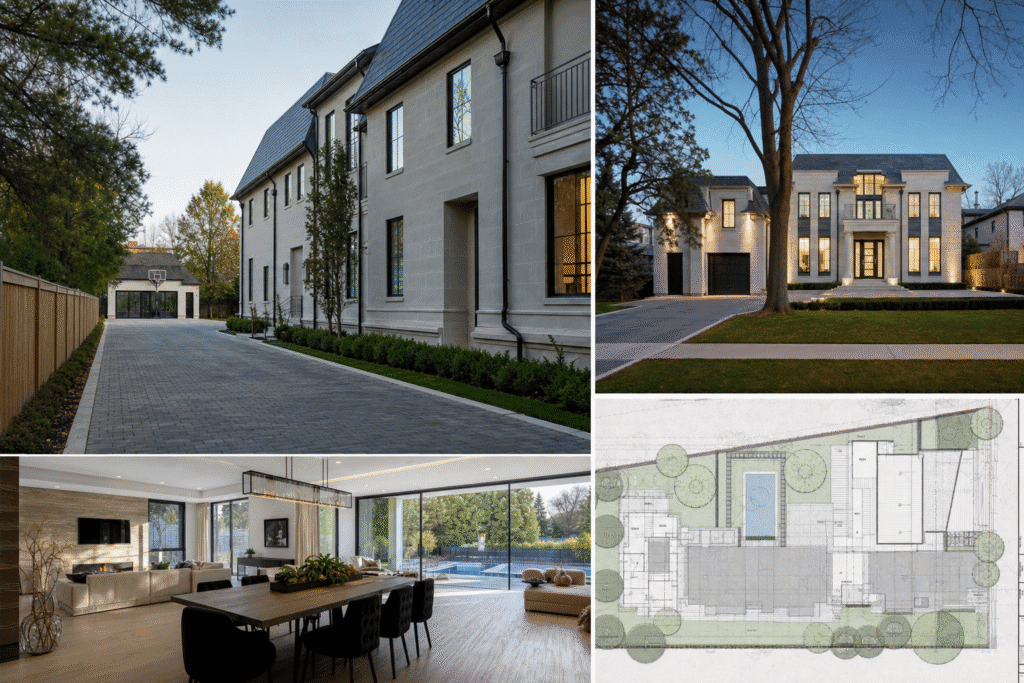
Most Toronto homeowners planning a garden suite assume fire access is automatic. They picture firefighters simply pulling up to the curb. But when your proposed garden suite sits more than 45 metres from the nearest street, everything changes. The Ontario Building Code triggers strict requirements that can reshape your entire site plan, add unexpected costs, or even kill the project entirely if you’re not prepared.
Fire department access for garden suites becomes a critical design constraint the moment distance exceeds 45 metres. That’s when the Code demands either a dedicated fire route, specialized fire suppression systems, or significant site modifications. For properties in North York and across the GTA, this often means rethinking driveways, landscaping, and even the positioning of your existing home.
Understanding these requirements before you submit permit drawings saves months of revisions and thousands in redesign costs. At Delvin Dream Homes, Dr. Faraz regularly navigates these exact scenarios during the garden suite design process, balancing Code compliance with practical site constraints and budget realities. The solutions exist, but they require early planning and expert guidance.
This article breaks down exactly what happens when fire access distance exceeds 45 metres, what your options are, and how to plan a compliant garden suite without unnecessary complications or expense.
Understanding the 45-Metre Fire Access Rule in Ontario
The Ontario Building Code establishes 45 metres as the maximum unobstructed distance from a public street to any part of a building. This isn’t measured as the crow flies. It’s the actual walking or driving distance firefighters would travel with equipment.
Why 45 metres specifically? Fire departments need to deploy hoses, ladders, and personnel quickly. Every additional metre increases response time and complicates rescue operations. The Code assumes that within 45 metres, standard equipment and procedures work effectively without modification.
When you exceed this distance, the Code treats your garden suite as a building with limited fire department access. That triggers Part 3 requirements in many cases, or at minimum demands alternative measures like sprinkler systems, fire-rated construction, or dedicated access routes.
Most urban lots in Toronto easily meet this requirement. But properties with long driveways, irregular shapes, or garden suites positioned deep in rear yards often exceed the threshold. During custom design consultations, Dr. Faraz routinely measures these distances during initial site analysis because they fundamentally affect feasibility and budget.
What Triggers the 45-Metre Threshold on Your Property
The distance calculation starts at the nearest point where a fire truck can legally park and operate. This usually means the public street, not your driveway. Even if you have a long paved driveway, it doesn’t count unless it meets fire route specifications.
Common scenarios that push garden suites beyond 45 metres include:
- Deep lots with the garden suite positioned at the rear property line
- Existing homes positioned far back from the street, with the garden suite behind them
- Properties with significant grade changes requiring long access paths
- Corner lots where the practical access point differs from the legal frontage
- Lots with easements or setback requirements that push structures deeper into the property
The measurement path must accommodate firefighters carrying equipment. It can’t include narrow gaps between buildings, stairs without adequate width, or routes obstructed by landscaping or fences. This often surprises homeowners who assume any paved surface counts.
At Delvin Dream Homes, the site analysis phase includes detailed fire access mapping before any design work begins. Dr. Faraz’s team measures from multiple street access points to identify the shortest compliant route, which sometimes reveals creative solutions homeowners hadn’t considered.
Code-Compliant Solutions When You Exceed 45 Metres
Exceeding 45 metres doesn’t automatically disqualify your garden suite project. The Ontario Building Code and Toronto’s municipal requirements offer several compliant pathways, each with distinct cost and site implications.
Option 1: Install a Fire Sprinkler System
A properly designed residential sprinkler system can eliminate the fire access distance restriction entirely. The Code allows unlimited distance from the street when automatic suppression is installed and maintained.
Residential sprinklers aren’t the industrial systems you see in commercial buildings. Modern systems use small, discrete heads that integrate cleanly into residential design. They connect to your domestic water supply with a dedicated shutoff and monitoring system.
The cost typically ranges from $8,000 to $15,000 for a garden suite, depending on size and complexity. That includes design, installation, inspection, and certification. Many Toronto homeowners initially resist this option due to cost, but it often proves cheaper than major site modifications.
Sprinkler systems also add value. Future buyers appreciate the safety feature, and insurance companies sometimes offer premium reductions. During multiplex and garden suite projects, Delvin Dream Homes coordinates sprinkler design with mechanical contractors early in the permit process to ensure seamless integration.
Option 2: Create a Code-Compliant Fire Route
A fire route is a dedicated access path meeting specific width, grade, turning radius, and load-bearing requirements. It essentially extends the public street onto your property for fire department use.
Minimum requirements in most Toronto applications include:
- Minimum 6-metre width for two-way access or 4 metres for one-way with turnaround
- Maximum 10% grade for emergency vehicles
- Turning radius adequate for fire apparatus (typically 12-metre outside radius)
- Pavement or surface capable of supporting 40,000 kg vehicle loads
- Year-round maintenance including snow removal
- No permanent obstructions like parked cars, planters, or gates without emergency access hardware
Building a compliant fire route on a residential property often requires removing landscaping, relocating driveways, and installing heavy-duty paving. Costs easily exceed $25,000 to $50,000 for properties needing significant work.
The ongoing maintenance obligation also surprises homeowners. You’re legally responsible for keeping the route clear and accessible 24/7. Toronto bylaw officers can issue violations if you obstruct your own fire route.
Option 3: Relocate the Garden Suite Closer to the Street
Sometimes the simplest solution is repositioning the structure. Moving the garden suite forward, even by a few metres, can bring it within the 45-metre threshold and eliminate all special requirements.
This requires careful analysis of setback requirements, privacy considerations, and site grading. But it often delivers the most cost-effective result. Dr. Faraz regularly explores multiple site plan options during the design phase, testing different positions to find the optimal balance between Code compliance, functionality, and aesthetics.
Relocation works particularly well on larger lots where you have flexibility. It’s less viable on constrained urban properties where every square metre matters.
How Toronto’s Zoning Bylaws Interact with Fire Access Requirements
Fire access isn’t solely a Building Code issue. Toronto’s zoning bylaws add another layer of complexity, particularly around lot coverage, setbacks, and landscaping requirements that affect where you can position structures and access routes.
Zoning bylaws dictate minimum setbacks from property lines, maximum lot coverage percentages, and required landscaped open space. When you need to create a fire route or reposition a garden suite, these zoning constraints often create conflicts.
For example, a fire route might require paving an area that zoning counts toward lot coverage limits. Or moving a garden suite forward might violate rear yard setback minimums even though it solves fire access.
These conflicts typically require a Committee of Adjustment application for minor variance approval. At Delvin Dream Homes, Dr. Faraz manages the full process, including the preparation of detailed drawings that demonstrate how the proposed solution meets the intent of both zoning and Building Code requirements. The Committee evaluates whether the variance maintains neighbourhood character while achieving legitimate safety objectives.
North York properties often face additional scrutiny due to mature tree preservation bylaws. Fire routes can’t arbitrarily remove protected trees, which sometimes forces creative routing or additional variance applications.
Cost Implications of Fire Access Solutions
Budget planning for garden suites gets complicated quickly when fire access exceeds 45 metres. The cost difference between a straightforward project and one requiring fire access modifications can range from $10,000 to over $60,000.
| Solution Type | Typical Cost Range | Ongoing Obligations |
|---|---|---|
| Residential Sprinkler System | $8,000 – $15,000 | Annual inspection, winterization if applicable |
| Fire Route Construction | $25,000 – $50,000+ | Maintenance, snow removal, keep clear 24/7 |
| Garden Suite Relocation | $3,000 – $12,000 (design/permit costs) | None beyond normal building maintenance |
| Committee of Adjustment Application | $3,500 – $6,000 | None |
| Enhanced Fire-Rated Construction | $15,000 – $30,000 | None beyond normal building maintenance |
These costs stack. A project requiring both a variance and a sprinkler system might add $20,000 to your baseline budget. Factor these numbers into feasibility analysis before you fall in love with a particular site plan.
The less expensive solution isn’t always obvious. A $40,000 fire route might seem excessive compared to a $12,000 sprinkler system, but if the fire route doubles as a useful driveway or parking area, the functional value changes the equation.
During initial consultations, the team at Delvin Dream Homes prepares comparative cost scenarios showing multiple compliant pathways. This allows homeowners to make informed decisions based on total project cost, not just individual line items.
The Permit and Approval Process for Fire Access Solutions
Fire access solutions require coordination across multiple city departments and approval stages. The process typically unfolds in this sequence:
First, submit preliminary site plan and building permit drawings showing your proposed fire access solution. Toronto Building Division reviews these against both the Ontario Building Code and municipal standards. They’ll identify deficiencies early, saving you from expensive surprises later.
If you’re installing sprinklers, your mechanical drawings must be prepared by a qualified designer and reviewed by the Fire Marshal’s office. The installation requires inspection and certification before occupancy. There’s no shortcut here. DIY or unlicensed installations will fail inspection.
Fire route applications require additional documentation including turning radius diagrams, surface load calculations, and maintenance agreements. Toronto Fire Services reviews and approves these separately from building permits. Expect 4 to 6 weeks for fire route approval alone.
Committee of Adjustment applications (if needed for zoning variances) add another 8 to 12 weeks to the timeline. You’ll need detailed drawings, planning rationale, and often neighbour consultation. Dr. Faraz routinely manages these CofA submissions for garden suite projects in North York and across Toronto, coordinating between the design team, city planners, and the Committee to address concerns proactively.
The entire approval process for a garden suite with fire access complications typically takes 5 to 8 months from initial application to permit issuance. That’s nearly double the timeline for a straightforward garden suite within 45 metres of the street.
Real-World Considerations and Common Mistakes
Theory and practice diverge significantly when it comes to fire access compliance. Homeowners and even some builders make predictable mistakes that create expensive problems mid-project.
Mistake one: assuming your driveway counts as fire access. Most residential driveways don’t meet the width, grade, or load requirements for fire apparatus. Don’t base your plan on this assumption without engineering confirmation.
Mistake two: ignoring winter maintenance obligations. Fire routes must remain passable year-round. If you live in an area with significant snowfall, you’re legally required to clear it promptly. Many homeowners don’t realize this until they receive a bylaw violation notice.
Mistake three: planning the garden suite first, then checking fire access. This backwards approach forces expensive redesigns. Fire access should be among the first constraints you analyze, not an afterthought discovered during permit review.
Mistake four: underestimating sprinkler system complexity. These systems require ongoing maintenance, annual inspections, and proper winterization if the garden suite isn’t heated year-round. They’re not install-and-forget solutions.
At Delvin Dream Homes, site feasibility analysis happens before any design work begins. This front-loaded approach identifies fire access constraints early, when you still have maximum design flexibility and minimal sunk costs. It’s the difference between a smooth approval process and a frustrating series of revisions.
When Fire Access Makes a Garden Suite Impractical
Honest answer: sometimes fire access requirements make garden suites financially or practically unworkable. Recognizing this early saves money and frustration.
Properties where garden suites often prove impractical include:
- Narrow lots with existing homes positioned more than 40 metres from the street and minimal side yard space for access routes
- Lots with extreme grade changes requiring extensive retaining walls or grading to achieve Code-compliant access slopes
- Properties with protected trees or environmental constraints that prevent fire route construction or sprinkler installation
- Sites where the only compliant solution requires removing the existing home’s parking or significantly impacting its functionality
The math matters. If fire access solutions add $50,000 to a garden suite project, and the rental income only justifies a $200,000 total investment, the return on investment collapses. Some homeowners proceed anyway for family accommodation or property value reasons, but it’s essential to understand the economics clearly.
Alternative housing options sometimes make more sense. A legal basement apartment or second suite within the existing home avoids fire access distance issues entirely because they’re part of the main building’s fire safety plan.
Dr. Faraz has advised clients to abandon garden suite plans when the numbers don’t work. That honest assessment, delivered early, prevents costly mistakes and redirects energy toward viable alternatives like renovations or additions that achieve similar goals without fire access complications.
Working with Licensed Professionals for Fire Access Compliance
Fire access isn’t a DIY territory. The intersection of Building Code requirements, municipal bylaws, fire service standards, and site-specific engineering demands expertise that only licensed professionals possess.
Your team should include a licensed architect or designer who understands fire access requirements in detail, not just conceptually. They need to produce drawings that satisfy both Toronto Building Division and Fire Services reviewers on the first submission.
If you’re installing sprinklers, engage a qualified fire protection engineer and licensed sprinkler contractor. Their work requires certification and ongoing compliance. Cutting corners here creates liability issues and failed inspections.
For fire routes, you’ll need civil engineering input on grading, drainage, and pavement design. Fire apparatus are heavy. Your driveway materials must support 40,000 kg loads without failure. This requires proper base preparation and surface selection.
Delvin Dream Homes operates as a licensed builder registered with HCRA, providing Tarion warranty coverage on all construction work. This registration isn’t optional for projects of this complexity. It ensures accountability, proper insurance, and adherence to provincial building standards throughout the project lifecycle.
The end-to-end service model matters here. When the same team handles design, permits, engineering coordination, and construction, fire access solutions integrate seamlessly. There’s no finger-pointing between separate designers and builders when issues arise. Dr. Faraz’s approach ensures that fire access planning informs every decision from initial concept through final inspection.
Frequently Asked Questions
Can I build a garden suite more than 45 metres from the street without a sprinkler system?
Yes, but you’ll need to provide an alternative compliant solution such as a Code-compliant fire route or enhanced fire-rated construction approved by Toronto Building Division. The specific requirements depend on your site conditions, building size, and occupancy classification. In some cases, repositioning the garden suite closer to the street eliminates the issue entirely without additional systems or construction.
How much does a residential fire sprinkler system add to garden suite construction costs?
Expect $8,000 to $15,000 for a complete residential sprinkler system in a typical garden suite, including design, installation, inspection, and certification. This cost varies based on garden suite size, water supply pressure, and system complexity. While it seems expensive upfront, it’s often the most cost-effective solution compared to building a compliant fire route which can exceed $50,000 on properties requiring significant site work.
Does the 45-metre rule apply if my property has a long private driveway?
Yes, the 45-metre rule still applies unless your private driveway meets full fire route specifications including minimum width, grade, turning radius, and load-bearing capacity. Most residential driveways don’t meet these requirements. The Building Code measures from the point where fire apparatus can legally and safely operate, which is typically the public street, not your existing driveway.
Will I need a Committee of Adjustment variance for fire access solutions?
Possibly. If your fire route or garden suite relocation conflicts with zoning bylaws regarding setbacks, lot coverage, or landscaping requirements, you’ll need a minor variance from the Committee of Adjustment. This adds 8 to 12 weeks to your approval timeline and costs $3,500 to $6,000 including application fees and professional drawing preparation. Not all fire access solutions require variances, it depends entirely on your specific site conditions and zoning.
Can I install a fire sprinkler system myself to save money?
No. Fire sprinkler systems must be designed by qualified professionals and installed by licensed contractors. The installation requires inspection and certification by the Fire Marshal’s office before occupancy approval. DIY or unlicensed installations will fail inspection and create serious liability issues. While this adds cost, proper installation ensures the system functions correctly in an emergency and maintains your insurance coverage and Tarion warranty eligibility.
Making Fire Access Work for Your Garden Suite Project
Fire department access for garden suites exceeding 45 metres from the street isn’t an insurmountable obstacle. It’s a design constraint requiring early identification, expert analysis, and strategic solution selection. The homeowners who succeed are those who address fire access during initial feasibility analysis, not during permit review.
Whether through sprinkler systems, compliant fire routes, or strategic repositioning, Code-compliant solutions exist for most properties. The key is understanding your options, their cost implications, and their impact on your overall project goals before you commit significant resources. Working with experienced professionals who navigate these requirements daily transforms a potential roadblock into a manageable planning factor.
Planning a garden suite project in Toronto or across Ontario? Get expert guidance from Dr. Faraz and the team at Delvin Dream Homes. We provide comprehensive site analysis, garden suite design, permit coordination, and licensed construction services with full Tarion warranty coverage. Request your free consultation today to discuss your property’s specific fire access requirements and explore compliant solutions that fit your budget and vision.
