
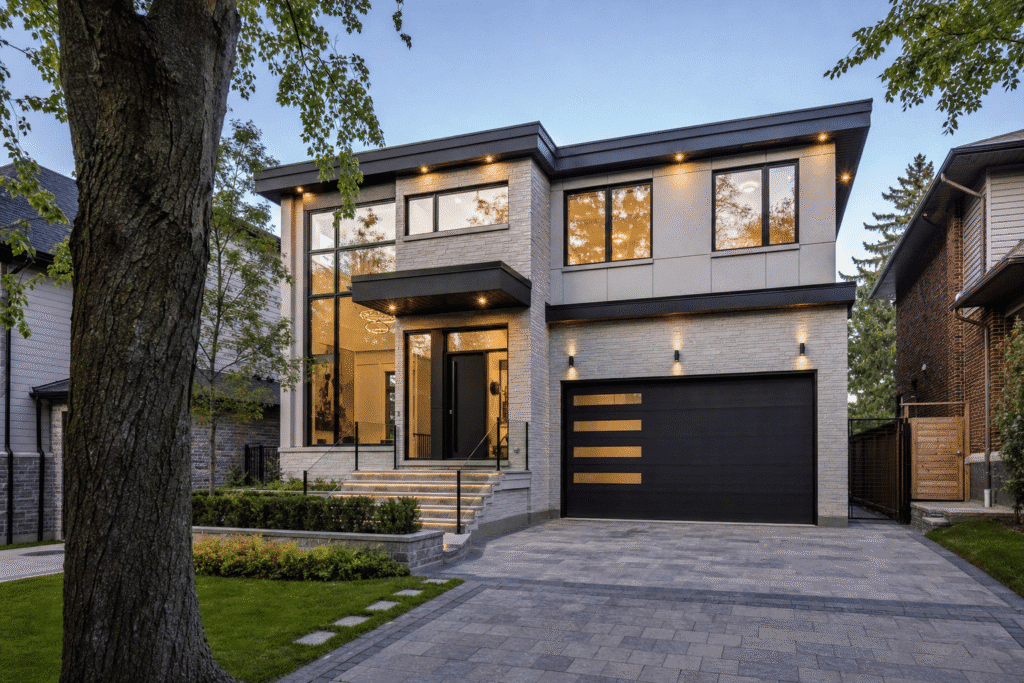
Most Toronto property owners don’t realize that the unused side yard sitting beside their house could be worth $400,000 or more as a separate buildable lot. Land severance, the legal process of dividing one property into two or more parcels, has become one of the most profitable ways to unlock hidden equity in residential real estate across the Greater Toronto Area. But navigating the Committee of Adjustment, satisfying zoning bylaws, and securing the right permits can feel overwhelming without expert guidance.
This guide walks you through the complete land severance process in Toronto, from initial feasibility assessment to final registration. You’ll learn when lot splits make financial sense, what the City of Toronto requires, and how to avoid costly mistakes that delay approval or reduce property value.
Whether you’re a homeowner looking to monetize surplus land or an investor seeking development opportunities, understanding the technical and regulatory requirements of land severance is essential before you submit your first application.
What Is Land Severance and When Does It Make Sense in Toronto?
Land severance is the legal division of one property into two or more separate parcels, each with its own title. The City of Toronto tightly controls this process through the Committee of Adjustment, which evaluates every application against four tests established by the Planning Act: does the severance maintain the general intent of the Official Plan, does it maintain the intent of the zoning bylaw, is it desirable for appropriate development of the land, and is it minor in nature?
Not every property qualifies. Your lot needs sufficient frontage, depth, and area to create two legally compliant parcels that meet minimum zoning standards. In most Toronto residential zones, you’ll need at least 15 metres of frontage (sometimes more) and enough depth to accommodate required setbacks, parking, and amenity space on both the severed and retained lots.
At Delvin Dream Homes, Dr. Faraz conducts preliminary zoning analysis before clients invest in formal applications, identifying whether a property meets Toronto’s dimensional requirements for severance and what variances might be necessary. This upfront assessment saves thousands in application fees for properties that simply can’t be divided under current bylaws.
The financial case for severance is strongest when you can create two full-size buildable lots rather than one undersized parcel. A 50-foot-wide lot in North York might sell both resulting parcels for $500,000 each, compared to $750,000 for the original combined property. That’s a $250,000 gain before construction costs.
The Committee of Adjustment Process for Lot Splits in Toronto
Toronto’s Committee of Adjustment is the tribunal that approves or denies land severance applications. The process typically takes four to six months from submission to decision, assuming no major complications or appeals.
You’ll need to prepare a consent application (the formal term for severance requests) that includes a survey showing the proposed property lines, zoning analysis demonstrating compliance or identifying required variances, and supporting documents like a planning rationale if your proposal is complex.
The City circulates your application to multiple departments: Transportation Services reviews driveway access and sight lines, Urban Forestry assesses tree impacts, Engineering evaluates grading and servicing, and City Planning examines conformity with zoning and Official Plan policies. Each department can impose conditions that must be satisfied before the severance is finalized.
Dr. Faraz manages the full Committee of Adjustment process for land severance projects, preparing technical drawings that address departmental concerns before they become objections and coordinating with City staff to resolve conditions efficiently. This expertise is particularly valuable when variances are required alongside the consent application, since both must be approved simultaneously.
If neighbouring property owners object to your severance, the Committee will hear their concerns at a public hearing. Most objections centre on parking impacts, tree removal, or perceived overdevelopment. A well-prepared planning rationale that demonstrates how your proposal satisfies the four tests usually overcomes opposition unless the concerns are substantive and well-founded.
Once approved, you’ll receive a conditional consent with a list of requirements to satisfy within two years: arrange new municipal addresses, draft reference plans showing the exact boundaries, obtain clearance letters from applicable utilities, and register the severance with the Land Registry Office. Miss the deadline and your consent lapses, forcing you to reapply from scratch.
Zoning Requirements and Dimensional Standards for Severed Lots
Toronto’s zoning bylaws (primarily 569-2013 in the former City of Toronto and various legacy bylaws in former municipalities like North York) establish minimum lot dimensions that both your severed and retained parcels must meet. These standards vary by zone but typically require 12 to 15 metres of frontage, 30 to 45 metres of depth, and 370 to 550 square metres of lot area for each new parcel.
Irregular lot shapes complicate severance. If your property is wider at the rear than the front, you might be able to create two lots through a flag lot configuration where one parcel has a narrow access strip leading to a wider rear building envelope. But Toronto generally discourages flag lots because they create servicing challenges and limit streetscape continuity.
Setback requirements on severed lots can be tricky. The original house might have been built with a 3-metre side yard assuming it would remain one property, but after severance, that same 3 metres might become an exterior side yard requiring 4.5 metres under current zoning. This triggers a minor variance application that must be approved alongside the consent.
At Delvin Dream Homes, our land development services include detailed zoning analysis that models both the severed and retained lots against all applicable dimensional standards, identifying required variances before application submission. This preparation prevents surprise conditions or deferrals at the Committee hearing.
Parking requirements also affect severance feasibility. Each new lot must provide required parking spaces (typically two per dwelling), which means you need enough driveway width and depth on both parcels. Corner lots offer advantages here since each parcel can take access from a different street, eliminating the shared driveway conflicts that plague mid-block severances.
Survey and Permit Requirements Before and After Severance
You’ll need a current survey showing existing structures, lot dimensions, easements, and encroachments before applying for severance. The survey must be prepared by an Ontario Land Surveyor and should clearly illustrate the proposed property division with dimensions for both parcels.
If your existing house or garage encroaches across the proposed lot line, you have three options: demolish the encroaching structure, adjust the lot line to eliminate the encroachment, or register an encroachment agreement (though these are rare and complicate future sales). Most applicants choose to adjust the lot line since demolition is expensive and encroachment agreements create title complications.
After the Committee approves your severance, you’ll need a reference plan survey that shows the exact legal boundaries of each new parcel. This document gets registered on title and becomes the official description of your severed and retained lots. The reference plan must be prepared by the same surveyor who did your initial survey and must satisfy Land Registry Office standards.
Building permits come next if you plan to construct on the newly severed lot. Toronto requires full permit drawings showing the proposed house design, grading and drainage plans, foundation details, and energy compliance calculations. These drawings must demonstrate compliance with the Ontario Building Code and all applicable zoning standards (as approved through any minor variances).
Delvin Dream Homes provides end-to-end service from severance approval through permit drawings and construction, ensuring design continuity and eliminating coordination gaps between your surveyor, planner, architect, and builder. This integrated approach is particularly valuable for complex projects like 4-plex developments on newly severed lots where zoning, design, and construction sequencing must align perfectly.
Costs and Timeline: What to Expect from Application to Registration
Expect to invest $15,000 to $30,000 in professional fees and application costs before your severance is registered. This includes Committee of Adjustment application fees (around $5,000), surveying costs ($3,000 to $6,000 for initial and reference plan surveys), planning and architectural services ($5,000 to $12,000 depending on complexity), and legal fees for final registration ($2,000 to $4,000).
The timeline breaks down roughly as follows: two to four weeks for preliminary zoning analysis and survey preparation, four to six weeks for application preparation and submission, eight to twelve weeks for City circulation and review, one to two weeks from hearing to decision, and eight to sixteen weeks to satisfy conditions and register the severance. Total elapsed time ranges from six months to one year for straightforward applications.
Complications extend timelines significantly. If neighbours appeal the Committee’s decision to the Ontario Land Tribunal (formerly the Local Planning Appeal Tribunal), add six to eighteen months for the appeal process. If you need to relocate utilities or obtain easements, add two to six months depending on utility responsiveness.
Carrying costs during this period can be substantial if you’re holding the property specifically for severance. Property taxes, mortgage interest, and insurance continue regardless of application delays. Factor these holding costs into your financial analysis when evaluating whether severance makes economic sense.
The payoff comes when you sell the severed lot or develop both parcels. A well-executed severance in a strong Toronto neighbourhood can generate $300,000 to $600,000 in value creation, far exceeding the time and cost investment required to navigate the approval process.
Common Severance Mistakes and How to Avoid Them
The biggest mistake is assuming your lot can be severed just because it’s large. Many Toronto properties have sufficient area but fail on frontage, depth, or setback requirements that make two compliant lots impossible without major variances. Get professional zoning analysis before investing in applications.
Another common error is ignoring tree preservation requirements. If your proposed lot line runs through the critical root zone of a protected tree, Urban Forestry will object to the severance or impose conditions requiring compensation plantings and arborist supervision during construction. Plan lot lines to avoid valuable trees whenever possible.
Inadequate parking design sinks many severance applications. Both lots need functional driveways with adequate width (minimum 2.75 metres in Toronto), proper sight lines, and sufficient maneuvering space. Corner lots have natural advantages, but mid-block properties often struggle to fit two driveways without creating traffic safety concerns that Transportation Services flags.
At Delvin Dream Homes, we’ve guided dozens of successful severance applications through the Committee of Adjustment, including complex cases involving heritage properties, ravine setbacks, and multiplex developments on newly severed lots. Dr. Faraz’s background as both an architect and licensed builder means we anticipate constructability issues during the planning stage, avoiding design decisions that complicate future permitting or construction.
Failing to satisfy conditions within the two-year deadline is another expensive mistake. Clients sometimes assume they can let conditions drag on indefinitely, but the Committee’s consent expires if you don’t finalize the severance within the specified timeframe. Track condition deadlines carefully and engage professionals early to obtain required clearances.
Development Opportunities After Successful Lot Severance
Once your severance is registered, you own two separate properties with independent development potential. The most common path is selling the severed lot to a builder or homebuyer while retaining your existing house on the other parcel. This generates immediate capital without construction risk.
Alternatively, you can develop both lots simultaneously, either building two single-family homes or exploring multiplex options if zoning permits. Toronto’s recent reforms (particularly Bill 23) have expanded permissions for multiplexes in residential zones, meaning a newly severed lot might accommodate a triplex or fourplex rather than just a single dwelling.
Investors increasingly pursue severance-plus-development strategies where they buy oversized lots, sever them, and build multiplex housing on both parcels. This approach maximizes density and rental income while taking advantage of as-of-right permissions that don’t require rezoning.
For homeowners who want to age in place while generating income, severance combined with a garden suite or additional residential unit on the retained lot creates flexible living arrangements without selling the family property. The severed lot sale funds the garden suite construction, creating a self-sufficient retirement plan.
Delvin Dream Homes offers custom architectural design and construction services tailored to newly severed lots, with particular expertise in maximizing buildable area while maintaining neighbourhood character and satisfying Toronto’s urban design guidelines. As an HCRA-licensed builder offering Tarion Warranty coverage, we provide the financial protection and quality assurance that make developing newly severed lots less risky than working with unlicensed contractors.
Frequently Asked Questions About Land Severance in Toronto
How much does it cost to sever a lot in Toronto?
Total professional fees and application costs typically range from $15,000 to $30,000, including Committee of Adjustment fees, surveys, planning services, and legal costs. Complex applications requiring multiple variances or planning rationale reports may cost more.
How long does the land severance process take in Toronto?
Straightforward applications take six to twelve months from initial survey to final registration. This includes four to six months for Committee review and hearing, plus several months to satisfy conditions. Appeals to the Ontario Land Tribunal can extend timelines by twelve to eighteen months.
Can any property in Toronto be severed?
No. Your property must meet minimum zoning requirements for lot frontage, depth, and area on both the severed and retained parcels. Most Toronto residential zones require at least 12 to 15 metres of frontage per lot, meaning you typically need 30 metres total to create two compliant parcels.
What is the Committee of Adjustment and why is it involved?
The Committee of Adjustment is a quasi-judicial tribunal that approves land severances (called consents) and minor variances in Toronto. It evaluates whether your proposed lot division maintains the intent of the Official Plan and zoning bylaws, whether it’s desirable development, and whether it’s minor in nature.
Do I need a builder before applying for land severance?
No, you can apply for and complete severance without construction plans. However, working with an experienced design-build firm like Delvin Dream Homes during the planning stage ensures your lot lines are optimized for future development and that you anticipate zoning or servicing issues that might complicate later permitting.
Moving Forward with Your Toronto Land Severance Project
Land severance represents one of the most effective wealth-building strategies available to Toronto property owners with suitable lots. The process requires patience and expertise, but the financial returns and development flexibility make it worthwhile when executed properly. Understanding Toronto’s zoning requirements, preparing thorough applications, and satisfying Committee conditions on schedule are the keys to successful lot division.
If you’re considering land severance in Toronto or North York and want expert guidance through the Committee of Adjustment process and beyond, Delvin Dream Homes offers comprehensive services from initial feasibility analysis through final construction. Dr. Faraz and our team of licensed professionals have guided dozens of severance applications through approval and development. Request a free consultation to discuss your property’s severance potential and explore development options that maximize your investment.
